English
  German
 Do you want to improve specific skills?
Do you want to facilitate efficient research at your institution?
Customised training can help!
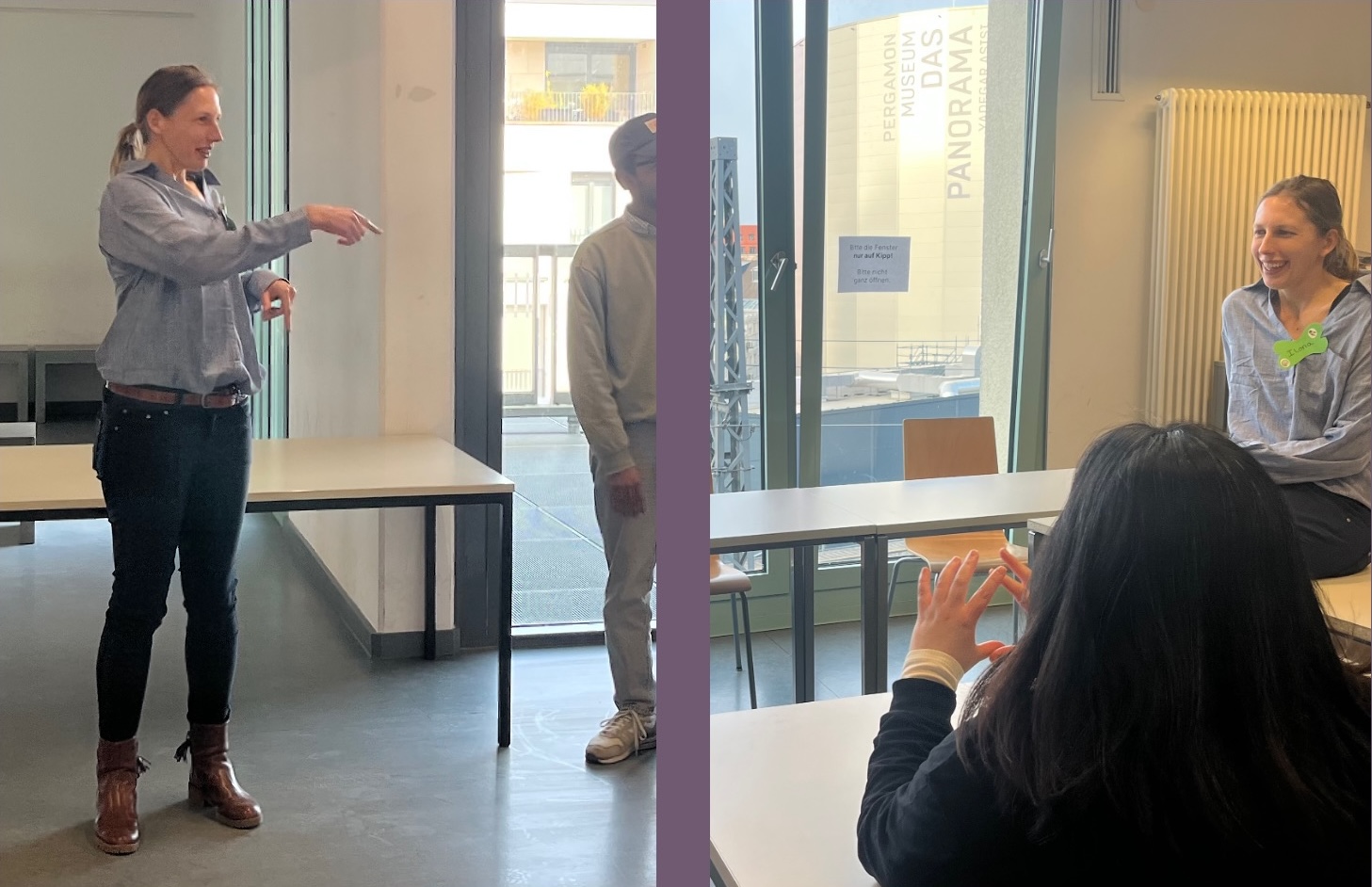
I provide trainings tailored to your needs. My trainings focus on skills that are crucial for scientists in academia (learn more about my academic background and CV).
Possible training formats include
- In person trainings and virtual trainings
- Half-day / one-day / two-day workshops for groups
- Workshop series (several shorter sessions) for groups
- 1:1 trainings
Topics include:



Good scientific practice
- Understanding scientific values
- Becoming aware of grey areas in academia
- Open Science practices and other tools for making your research reproducible, sustainable and impactful
Responsible use of generative AI in research
- Understanding how AI-based tools work
- Exploring use cases across the research cycle
- Potential and risks of generative AI for research
Practical research skills
- Making effective and engaging scientific presentations
- Scientific writing
- Tools and strategies for data analysis
Soft skills
- Preventing and solving conflicts through effective communication
- Personal development and career planning
- Creativity in sciences
Workshop examples
AI for Data Analysis: Foundations, Practice, Ethics
This workshop offers an introduction to using AI-based systems for data analysis. You will gain a basic understanding of how such tools work and explore their practical application in research workflows.
During the workshop, you will:
- learn the fundamentals of large language models and AI systems
- explore AI-supported tools for data exploration, visualization, and the development of analysis strategies
- engage in hands-on exercises working with spreadsheet data using AI tools
- discuss the potential and limitations of these tools in research contexts
- examine ethical and legal considerations and existing guidelines for responsible AI use in data analysis
- reflect on how and when to apply AI to your own data and research questions
This workshop is conceptualised as a half-day workshop, but can be customised or offered as part of a longer workshop on AI.
Building bridges for Success: Effective Communication For Scientists
Effective communication is the key to building strong collaborations, profiting from everyone’s input in meetings, and fostering positive interactions with supervisors and students. In this workshop, a variety of communication strategies are introduced and discussed. Engaging exercises will allow you to practice and try out different forms of communication in a safe environment.
The aim of the workshop is to help you to
- deliver feedback constructively
- handle difficult conversations with confidence
- resolve work-place conflicts
- use active listening strategies to best benefit from your colleagues’ perspectives
- increase your impact by successfully conveying your own perspective through the principle of non-violent communication
- lead and moderate meetings effectively
This workshop is conceptualised for up to 12 participants, and either as a 1-day version (basic principles) and a 2-day version (additionally working on own examples). Amended versions include a half-day teaser workshop for up to 30 participants.
Creativity in Science
Scientific work depends not only on rigorous methods but also on creative thinking to develop new theories and solve practical problems. This workshop focuses on concrete strategies to activate creativity. This workshop introduces concrete strategies to support creative thinking in research. Short inputs will provide insights from creativity research, while practical exercises will help you activate flexible thinking, try out idea-generation techniques, and reflect on how to make creativity a productive part of your scientific work.
The aim of the workshop is to help you to
- understand the role of creativity in scientific thinking and problem-solving
- explore methods that support flexible thinking and idea generation
- apply creativity tools to real research questions
- reflect on how to integrate creative processes into your individual research practice
This is conceptualised as a half-day workshop, optimal for 15-25 people.
Exploring AI Tools in Research: Potential, Risk, Responsibility
Generative AI is rapidly changing the way research is conducted—from literature search and data analysis to writing and peer review. This workshop offers a structured opportunity to explore both the practical uses of AI tools and the broader questions they raise for scientific integrity and responsibility.
During the workshop, you will:
- complete hands-on research tasks using generative AI tools and assess the quality, reliability, and transparency of the outputs
- discuss when and how AI use becomes problematic in light of good scientific practice and Open Science principles
- reflect on the implications of outsourcing intellectual work to mathematical models and sharing data with commercial platforms
- examine how existing institutional and ethical guidelines apply to real-world research situations involving generative AI
- develop your own criteria for responsibly integrating AI into your scientific workflow
This workshop can be adapted in scope and focus, ranging from short introductory sessions to full-day formats.
Good Scientific Practice
Good scientific practice is the foundation of reliable research and scientific progress. In this workshop, we will explore its core principles from both systemic and practical perspectives. Short inputs, reflection exercises, and case discussions will offer opportunities to connect abstract norms with everyday research practice.
The aim of the workshop is to help you to
- understand key concepts such as good scientific practice, scientific misconduct, questionable research practices, and responsible research
- clarify roles and responsibilities for maintaining research ethics and integrity
- become familiar with relevant regulations and codes of conduct (e.g. DFG guidelines, institute-specific policies)
- reflect on how academic structures and research culture can make good practice difficult to implement
- analyse real-life grey zones and individual dilemmas in research practice
- consider how good scientific practice applies in the context of generative AI
This workshop can be tailored in scope and depth, from short introductory formats to extended sessions with in-depth practice.
Making a scientific research presentation
Mastering the art of scientific presentations will help you to convey complex ideas to diverse audiences and, thus, leave a lasting impact.
This workshop introduces diverse strategies for preparing and delivering compelling presentations. Through the examination of specific examples, you will identify and discuss features that underpin effective scientific research presentations. Engaging exercises will allow you to apply different strategies to your own example and receive constructive feedback in a safe environment.
The workshop will help you to:
- identify main messages and key takeaways from complex ideas
- structure the content and develop narratives to enhance the memorability of your presentations
- create effective visualizations and design slides to maximize clarity and signal-to-noise ratio
- develop strategies for connecting and engaging with the audience
- approach scientific presentations with a positive mindset and with self-confidence
At the end of the workshop, you will not only leave with tangible outcomes but also with a toolkit of strategies ready to apply when preparing future presentations.
This workshop can be offered as a 1-day or extended 2-day version is best suited for a group not larger than 20 participants.
Mastering Machine Learning with Python: A Comprehensive Workshop
I offer workshops on Python and Machine learning in collaboration with Dr. Alex Britz.
This 3-day workshop is designed to provide a solid foundation in machine learning concepts, advanced Python programming, and practical applications.
Through a balance of theoretical input and hands-on exercises, you will
- understand the core principles of machine learning and the essential steps of data preparation
- enhance your Python skills, focusing on advanced concepts for machine learning projects
- learn to create and manage virtual environments and version control systems using Git
- dive into supervised learning techniques using the Scikit-Learn library
- explore neural networks and deep learning frameworks with PyTorch
By the end of this workshop, you will have not only acquired conceptual competencies but also developed practical skills to apply to your own machine learning projects.
This workshop is best suited for a group not larger than 12 participants.
Python Fundamentals
I offer workshops on Python and Machine learning in collaboration with Dr. Alex Britz.
This 2-day workshop is designed to provide a solid foundation in scientific programming with Python programming.
Through a balance of theoretical input and hands-on exercises, you will
- get an overview of Python’s versatility with real-world use cases
- install and getting started with Python: Jupyter Notebooks, Spyder, Anaconda, command line interface
- dive into Python syntax: data types and variables, conditional statements, loops, and functions
- implement the reading and writing of files
- go through the first steps of data treatment with Numpy and data visualization with Matplotlib
- try what you have learned on your own data and problems
This workshop is best suited for a group not larger than 12 participants. No prior programming skills are required.
Responsible Research and Open Science: Trends and Implications
Movements towards Responsible Research and Open Science are gaining increasing importance in the global academic system. This interactive workshop is designed to equip you with a comprehensive understanding of these key concepts and provide you with the opportunity to reflect on how these movements influence your scientific practices as well as career trajectories.
During the workshop, you will:
- learn about the concepts of Responsible Research, Open Science, Good Scientific Practice and Research Evaluation
- engage in exercises and discussions about the applicability of these concepts to your own research (field)
- reflect on your role as a researcher in relation to your employer, community and society
- explore factors that hinder and facilitate practicing responsible research
- discuss implications and strategies for career development in the context of responsible research
This workshop can be tailored to specific interests, whether it be focusing on European developments, German regulatory frameworks, or Open Science practices. Possible formats for this workshop range from short teaser sessions to full day workshops.
The Confidence Boost: Techniques from Theatre to Enhance Your Presentation Skills
Effective presentation skills and self-confidence are essential for making a lasting impact in various settings, including conferences, interviews, meetings, and discussions. To help you enhance your communication and boost your confidence, this engaging and dynamic workshop draws upon techniques and strategies from the world of theatre. In a safe, supportive, and fun environment, you will have the opportunity to experiment with your nonverbal and verbal communication, body language, and voice, and receive constructive feedback.
On day one of this workshop, we will cover basic principles and introduce the theater format to help you get comfortable with acting techniques. On day two, we will work on specific examples tailored to your interests. The workshop’s goal is not to teach you how to “act” as someone else, but rather to help you become more aware of your own communication style and to experiment with new techniques. Through the use of theatre exercises, you will learn to explore and refine your presentation and communication skills, with a focus on transferring these techniques to real-life situations.
This workshop is best suited for a group not larger than 10 participants and ideally given as a 2-day workshop.
Why training?
Excellent science does not only rely on domain-specific knowledge and technical skills. In particular, self-management and communication skills are crucial for conducting research efficiently. Good scientific writing and engaging presentations are highly important for maximising the impact of your research. If you want to succeed as a scientists, there will be times where you need to present your research clearly and with self-confidence, negotiate, face internal conflicts and deal with difficult interpersonal situations. Training will equip you with the resources to master all aspects of academic life.
What to expect
My trainings are a result of the skills I gained during my academic career, my teaching experience, and my expertise in communication. In my workshops, participants are provided with tools and strategies and have the opportunity to try them out in a safe environment as well as reflect on the application to their own individual situations. My background as trained mediator and a keen improvisation theatre actress allows me to flexibly and individually react to the participants’ needs and input. Being a researcher myself, I will present any theoretical content with as much scientific evidence as possible and with a critical mindset. I design my trainings as evidence-informed as possible. This means that I keep myself informed on the latest research on learning and training design and regularly exchange expertise with my trainer network.
When is training not the right tool
The purpose of training is to help you acquire skills that you can apply to your particular situation, but it is not the right tool, if you want input and support with your particular challenges or conflicts. If this is the case, you could consider Coaching or Mediation.
My trainings are highly interactive and rely on active participation and reflection of the participants. If you are looking for somebody to lecture on theoretical content, then my trainings are not the right tool for you.
What next
Get in touch and we will discuss setting, format and cost of your customised training. Trainings can take place either virtually or in person.