 English
  German
 Technical skills
Research is becoming more technical than ever: AI-based tools are changing how we work, machine learning on large datasets is spreading into every field, and being able to write and understand code is a real advantage when it comes to keeping up with recent developments. These are all things I cover in my technical trainings, drawing on my own research background, which was highly data intensive, from developing complex analysis workflows for biomedical images to training neural networks.
Coding
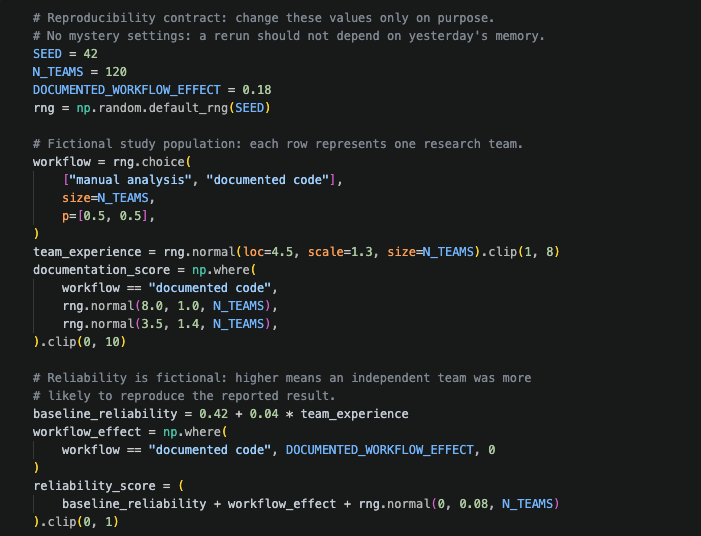
In fields where findings are based on the collection and analysis of data, reliable preparation and processing of these data is essential. Scientific coding is needed for creating reproducible and transparent workflows that others can comprehend, verify and build upon.
Generative AI in research
The potential of using AI systems across the research cycle is enormous, but using these tools uncritically carries considerable risks. In my view, developing a sensible, critical and informed approach to AI tools is one of the most important professional development tasks of our time. Also legal frameworks around data privacy and intellectual property make training more urgent than ever.
Integrity
Technical skill and research integrity belong together, because understanding how a method works is a prerequisite of using it responsibly in your work and being transparent and accountable. Finding the right balance between productivity boost and thorough research is a constant challenge for researchers.
Training approach
My technical workshops are hands-on: input on how things actually work, exercises to try them out, group reflection and discussions around insights and concerns, and time to apply them to your own problem. My workshops create a space in which people enjoy critically experimenting in a structured format.
Technical skills workshop examples
Exploring AI Tools in Research: Potential, Risk, Responsibility
Generative AI is rapidly changing the way research is conducted—from literature search and data analysis to writing and peer review. This workshop offers a structured opportunity to explore both the practical uses of AI tools and the broader questions they raise for scientific integrity and responsibility.
During the workshop, you will:
- complete hands-on research tasks using generative AI tools and assess the quality, reliability, and transparency of the outputs
- discuss when and how AI use becomes problematic in light of good scientific practice and Open Science principles
- reflect on the implications of outsourcing intellectual work to mathematical models and sharing data with commercial platforms
- examine how existing institutional and ethical guidelines apply to real-world research situations involving generative AI
- develop your own criteria for responsibly integrating AI into your scientific workflow
This workshop can be adapted in scope and focus, ranging from short introductory sessions to full-day formats.
AI for Data Analysis
This workshop offers an introduction to using AI-based systems for data analysis. You will gain a basic understanding of how such tools work and explore their practical application in research workflows.
During the workshop, you will:
- learn the fundamentals of large language models and AI systems
- explore AI-supported tools for data exploration, visualization, and the development of analysis strategies
- engage in hands-on exercises working with spreadsheet data using AI-based coding tools
- discuss the potential and limitations of these tools in research contexts
- examine ethical and legal considerations and existing guidelines for responsible AI use in data analysis
- reflect on how and when to apply AI to your own data and research questions
This workshop is conceptualised as a half-day workshop, but can be customised or offered as part of a longer workshop on AI.
Towards Worflow Automation with AI Tools and Python
I developed this workshop concept in collaboration with Dr. Alex Britz.
This workshop shows how recurring data analysis steps can be turned into robust, reproducible workflows using Python and AI assistants. The focus is on concrete use cases brought by the participants, which we translate together into automated pipelines.
In this workshop, participants will
- identify their own use cases and specify them as a clear workflow (input, steps, output, quality criteria)
- create Python scripts with AI support that automate these workflows
- apply strategies for validation and error control
- reflect on the use of AI in line with good scientific practice (transparency, data protection, documentation)
Python Fundamentals
I offer workshops on Python and Machine learning in collaboration with Dr. Alex Britz.
This 2-day workshop is designed to provide a solid foundation in scientific programming with Python programming.
Through a balance of theoretical input and hands-on exercises, you will
- get an overview of Python’s versatility with real-world use cases
- install and getting started with Python: Jupyter Notebooks, Spyder, Anaconda, command line interface
- dive into Python syntax: data types and variables, conditional statements, loops, and functions
- implement the reading and writing of files
- go through the first steps of data treatment with Numpy and data visualization with Matplotlib
- try what you have learned on your own data and problems
This workshop is best suited for a group not larger than 12 participants. No prior programming skills are required.
Mastering Machine Learning with Python: A Comprehensive Workshop
I offer workshops on Python and Machine learning in collaboration with Dr. Alex Britz.
This 2-day or 3-day workshop is designed to provide a solid foundation in machine learning concepts, advanced Python programming, and practical applications.
Through a balance of theoretical input and hands-on exercises, you will
- understand the core principles of machine learning and the essential steps of data preparation
- enhance your Python skills, focusing on advanced concepts for machine learning projects
- dive into supervised learning techniques using the Scikit-Learn library
- explore neural networks and deep learning frameworks with PyTorch
- apply what they have learned to their own data and problems.
By the end of this workshop, you will have not only acquired conceptual competencies but also developed practical skills to apply to your own machine learning projects.
This workshop is best suited for a group not larger than 12 participants.
Fundamentals of data analysis in R
Under development
My contributions to the field
My own research focuses on how to use magnetic resonance imaging (MRI) to reliably measure biologically and medically informative markers of the brain. Over the last years, I have also contributed to wider discussions around responsible use and development of AI and I am part of trainer communities to discuss how to best teach digital skills.
Contributions in my research field
- I spent more than a decade developing analysis methods for complex biomedical data, including work with deep learning, and publishing the tools and the validation work behind them (22 open access papers, over 900 citations).
- I developed a software package for the analysis of quantitative MRI data, openly available on GitHub: github.com/IlonaLipp/postmortembrain-mpm
- Lead of the OHBM analysis tutorials (2018-2022), open educational resources on machine learning in neuroimaging, resting-state fMRI analysis, diffusion MRI, anatomy in neuroimaging, MRS-based GABA measurement, network neuroscience and reproducibility/good neuroimaging practices
Contributions to responsible AI development and application
- Lipp, I., Van Scherpenberg, C. (2025). Opportunities and risks at the intersection of AI and Open Research Data. Open Science Conference, Hamburg.
- Mayer, K., …, Lipp, I., … et al. (2025). Offenheit neu verhandeln: KI im öffentlichen Interesse gestalten (Weizenbaum Policy Paper, 15). Weizenbaum Institute, Berlin. doi: 10.34669/WI.PP/15
- Mayer, K., …, Lipp, I., … et al. (2025). Yes, we are open?! Künstliche Intelligenz verantwortungsbewusst gestalten: Konferenzergebnisse im Spannungsfeld Open Science und KI (Weizenbaum Discussion Paper, 51). Weizenbaum Institute. doi: 10.34669/WI.DP/51
Trainer communities for digital skills
- Member of the Digital Research Academy trainer network, following its train-the-trainer programme in 2025
- Member of the trainer team for the AI courses of the Helmholtz Information & Data Science Academy (HIDA)
- Member of the AI trainer network empowerpeopleAI
- Collaboration with Dr Alex Britz on delivering scientific coding workshops