 English
  German
 Research integrity
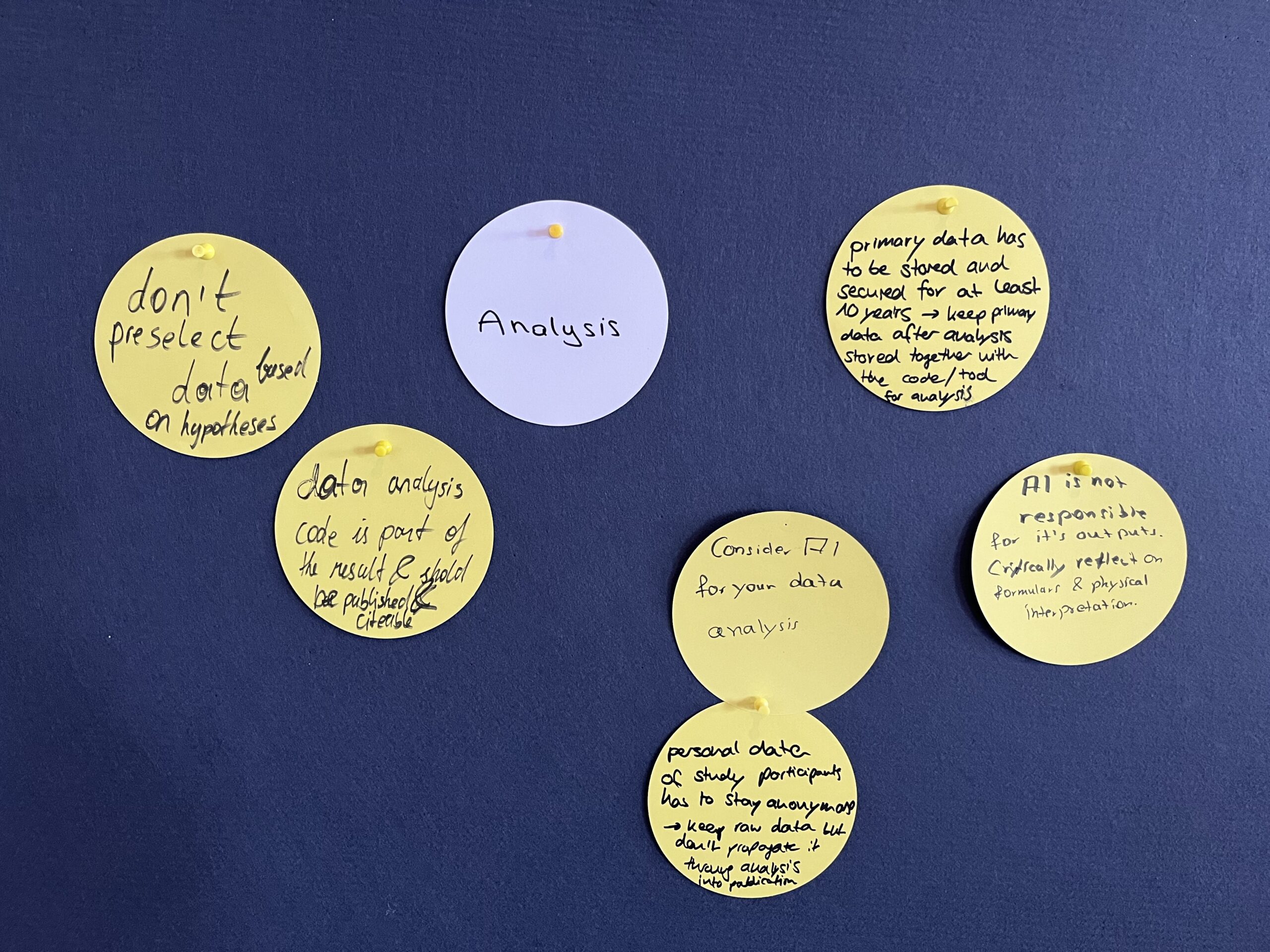
Research integrity is the art of doing research well and responsibly, grounded in shared scientific values. Generally, people entering academic research have an intrinsic motivation to live up to these ideals. Guidelines and frameworks for good scientific practice give direction for how to do that. Training on this matter is often mandatory. However, learning about research integrity should not be memorising a list of abstract rules. Good scientific practice is contested terrain, with some consensus and many grey zones, personal dilemmas, competing incentives and interpersonal conflicts. Understanding the fundamental principles of research integrity, the academic system in which we operate, and the resulting controversies is crucial for researchers to derive strategies for implementing good scientific practice in their own workflows.
Open Science
One of my fields of expertise is Open Science. Open Science is an ambition as well as a set of tools to uphold the scientific values of transparency and support reproducibility (the ability to repeat analyses or entire studies, which is one marker of quality and reliability in many scientific fields). Open Science also aims to make publicly funded research more collaborative and accessible. There are many myths and valid controversies around Open Science, including data privacy concerns. During my time in the Open Science Initiative of the MPI-CBS and as Open Science officer at the University of Leipzig, I have accumulated a vast amount of a lot of practical knowledge on the subject, which I bring into my workshops.
AI and integrity
New technologies raise integrity questions faster than any guideline can answer them, from authorship and disclosure to the potential bias and reliability of results. Research integrity can no longer be discussed without considering generative AI tools and their widespread use in the academic system. In my workshops, we apply general principles of integrity to the use of AI and try to find strategies to work responsibly in specific use cases.
How I work
My workshops on research integrity take a systemic approach, widening the perspective from individual conduct to the structures around it. That also means that I encourage participants not only to take responsibility for implementing good scientific practice in their own work, but also for maintaining integrity in their field and contributing to discussions about field-specific standards. We work through dilemmas, debate them, and connect abstract rules back to the situations in which they have to hold
Research integrity workshop examples
Good Scientific Practice
Good scientific practice is the foundation of reliable research and scientific progress. In this workshop, we will explore its core principles from both systemic and practical perspectives. Short inputs, reflection exercises, and case discussions will offer opportunities to connect abstract norms with everyday research practice.
The aim of the workshop is to help you to
- understand key concepts such as good scientific practice, scientific misconduct, questionable research practices, and responsible research
- clarify roles and responsibilities for maintaining research ethics and integrity
- become familiar with relevant regulations and codes of conduct (e.g. DFG guidelines, institute-specific policies)
- reflect on how academic structures and research culture can make good practice difficult to implement
- analyse real-life grey zones and individual dilemmas in research practice
- consider how good scientific practice applies in the context of generative AI
This workshop can be tailored in scope and depth, from short introductory formats to extended sessions with in-depth practice.
Responsible Research and Open Science: Trends and Implications
Movements towards Responsible Research and Open Science are gaining increasing importance in the global academic system. This interactive workshop is designed to equip you with a comprehensive understanding of these key concepts and provide you with the opportunity to reflect on how these movements influence your scientific practices as well as career trajectories.
During the workshop, you will:
- learn about the concepts of Responsible Research, Open Science, Good Scientific Practice and Research Evaluation
- engage in exercises and discussions about the applicability of these concepts to your own research (field)
- reflect on your role as a researcher in relation to your employer, community and society
- explore factors that hinder and facilitate practicing responsible research
- discuss implications and strategies for career development in the context of responsible research
This workshop can be tailored to specific interests, whether it be focusing on European developments, German regulatory frameworks, or Open Science practices. Possible formats for this workshop range from short teaser sessions to full day workshops.
Career vs Conscience: Dilemmas in Open Science and Research Integrity
I developed this 90 minute workshop for an event at the German Centre for Integrative Biodiversity Research (iDiv), Leipzig.
Practicing the principles of good and open science does not always align with career advancements in academia. In contrast, there is a tension between what guidelines for research integrity tell us and what we are rewarded for. This is a structural problem that deeply affects research culture. We will start this workshop by simulating how individuals decisions on scientific practices may affect career success through an interactive board game. Afterwards, we will engage in structured reflection on the dilemmas that arise during the simulation and relate them to the challenges you face in your research. We will brainstorm options for how to act in this competitive environment as early career researcher, influence research culture, and turn good practices into career advantages. By the end of this workshop, you will have a better understanding of the dilemmas in research integrity and open science, and will gain practical strategies to navigate these challenges.
A link to the board game in English and German can be found here.
My contributions to the field
Over the last years, I have also contributed to wider discussions around research integrity and Open Science. Here are some concrete activities and outputs:
Activities:
- Co-organiser of the Open Science Forum Mitteldeutschland (2026)
- Reviewer for the Swiss Universities Open Science grants (2024 onwards)
- Working group “Error culture” in science of the NFDI EduTrain consortium (2024 onwards)
- Open Science Ambassador and member of the Open Science Award Committee of the Arqus University Alliance (2024 onwards)
- Organisation of the Open Science Leipzig networking events (2024 onwards); co-organisation of the Research Data Forum Leipzig event (2024)
- Co-founder of the Open Science Officer network (2024)
- Member of the oversight committee of the open-access publication innovation initiative Aperture (2020-2022)
- Co-organiser and founding member of the MPI-CBS Open Science Initiative (2019-2022)
- Lead of the OHBM analysis tutorials (2018-2022), open educational resources on machine learning in neuroimaging, resting-state fMRI analysis, diffusion MRI, anatomy in neuroimaging, MRS-based GABA measurement, network neuroscience and reproducibility/good neuroimaging practices
Outputs:
- Lipp, I., Hundt, C. (2026). Career and Conscience Board Game (in German and English): an educational board game on Open Science practices and the conundrums of the academic career system. Zenodo. doi: 10.5281/zenodo.19386634
- Lipp, I. (2026). Understanding reproducibility in the context of Open Science. SaxFDM Digital Kitchen. Zenodo. doi: 10.5281/zenodo.19352407
- Auer, S., …, Lipp, I., … et al. (2026). Barcamp Open Science 2026: Navigating Challenging Times. ZBW MediaTalk.
- Lipp, I., Van Scherpenberg, C. (2025). Opportunities and risks at the intersection of AI and Open Research Data. Open Science Conference, Hamburg.
- Mayer, K., …, Lipp, I., … et al. (2025). Offenheit neu verhandeln: KI im öffentlichen Interesse gestalten (Weizenbaum Policy Paper, 15). Weizenbaum Institute, Berlin. doi: 10.34669/WI.PP/15
- Mayer, K., …, Lipp, I., … et al. (2025). Yes, we are open?! Künstliche Intelligenz verantwortungsbewusst gestalten: Konferenzergebnisse im Spannungsfeld Open Science und KI (Weizenbaum Discussion Paper, 51). Weizenbaum Institute. doi: 10.34669/WI.DP/51
- Auer, S., …, Lipp, I., … et al. (2025). Barcamp Open Science 2025: From Threats to Collective Resilience. ZBW Mediatalk.
- Beyer, F., … , Lipp, I., … et al. (2021). A fMRI pre-registration template. PsychArchives. doi: 10.23668/psycharchives.5121
- Bourget, M.-H., …, Lipp, I., … et al. (2022). Microscopy-BIDS: an extension to the Brain Imaging Data Structure for microscopy data. Frontiers in Neuroscience 16:871228. doi: 10.3389/fnins.2022.871228